Can Pilates Improve Bone Density? Research on Women's Spinal Health
Patti Abel | OCT 25, 2026
pilates bone health
pilates osteoporosis
balance and fall prevention
strong bones
healthy aging
strong spine
Can Pilates Help Build Stronger Bones?
What Research Reveals About Spinal Bone Density, Women's Health & Longevity
Strong bones. Strong spine. Stronger years ahead.
When we think about building strength, our minds often go straight to muscles. We think about lifting weights, improving our posture, developing core strength, or feeling more capable in our everyday activities.
But what about the bones beneath those muscles?
Our bones are living, responsive tissues that continually adapt to the demands placed upon them. Just as our muscles respond to appropriate resistance, our bones respond to mechanical loading.
And as women move through perimenopause, menopause, and the years beyond, understanding this relationship becomes increasingly important.
One question I find particularly interesting is:
Can Pilates help improve spinal bone density, or is its greatest contribution to bone health found in the strength, balance, and movement confidence it develops?
Research offers some encouraging insights, along with important distinctions about what truly helps maintain and improve bone strength.
Let's explore what the science tells us and how we can apply it to movement that supports longevity.

Understanding Bone Health: Why Our Spines Deserve Attention
Bone is far from the rigid, unchanging structure we sometimes imagine.
Throughout our lives, specialized cells continuously break down older bone tissue and build new tissue in a process called bone remodeling.
Our bones respond to several influences, including:
Hormonal changes
Nutrition and mineral availability
Muscle strength and mechanical loading
Physical activity
Age and genetics
Certain medications and health conditions
Estrogen plays an important role in maintaining bone density. As estrogen levels decline during menopause, bone breakdown can begin to outpace bone formation.
This can contribute to osteopenia, a condition involving lower-than-normal bone mineral density, and osteoporosis, in which reduced bone strength increases fracture risk.
The spine is particularly important because the vertebrae contain substantial amounts of trabecular bone, a type of bone tissue that is metabolically active and sensitive to hormonal changes.
Loss of vertebral strength can increase the risk of compression fractures, which may affect posture, comfort, mobility, and independence.
But here's something I believe deserves more attention:
Bone health isn't simply about what shows up on a bone density scan. It's also about developing the strength, balance, coordination, and physical capacity that help us move confidently through life.
That's where thoughtfully designed movement becomes especially valuable.
What Does Research Say About Pilates and Spinal Bone Density?
A 2015 study published in the Journal of Back and Musculoskeletal Rehabilitation explored the effects of Clinical Pilates exercises on women with postmenopausal osteoporosis.
Researchers recruited 41 women and divided them into a Pilates exercise group and a control group.
They examined several important measures:
Lumbar spine bone mineral density
Physical performance
Pain intensity
Quality of life
What Did They Discover?
The findings were encouraging.
Women participating in the Clinical Pilates program experienced a statistically significant increase in lumbar spine bone mineral density.
Meanwhile, women in the control group experienced a statistically significant decrease.
But bone density wasn't the only area of improvement.
The Pilates group also demonstrated:
Improved physical performance. Participants showed measurable improvements in their ability to perform physical tasks.
Reduced pain. Women in the Pilates group reported significant decreases in pain intensity.
Improved quality of life. Participants experienced improvements across the quality-of-life measures assessed.
These findings suggest that Clinical Pilates may offer benefits extending beyond muscular strength and flexibility.
For women navigating osteoporosis, the possibility of improving physical function and comfort while supporting bone health is particularly meaningful.
However, it's important to recognize that this was a relatively small study. Its findings are promising, but they don't establish that every Pilates program will increase bone density.
Research: Angın E, Erden Z, Can F. (2015). The effects of clinical pilates exercises on bone mineral density, physical performance and quality of life of women with postmenopausal osteoporosis. Journal of Back and Musculoskeletal Rehabilitation.
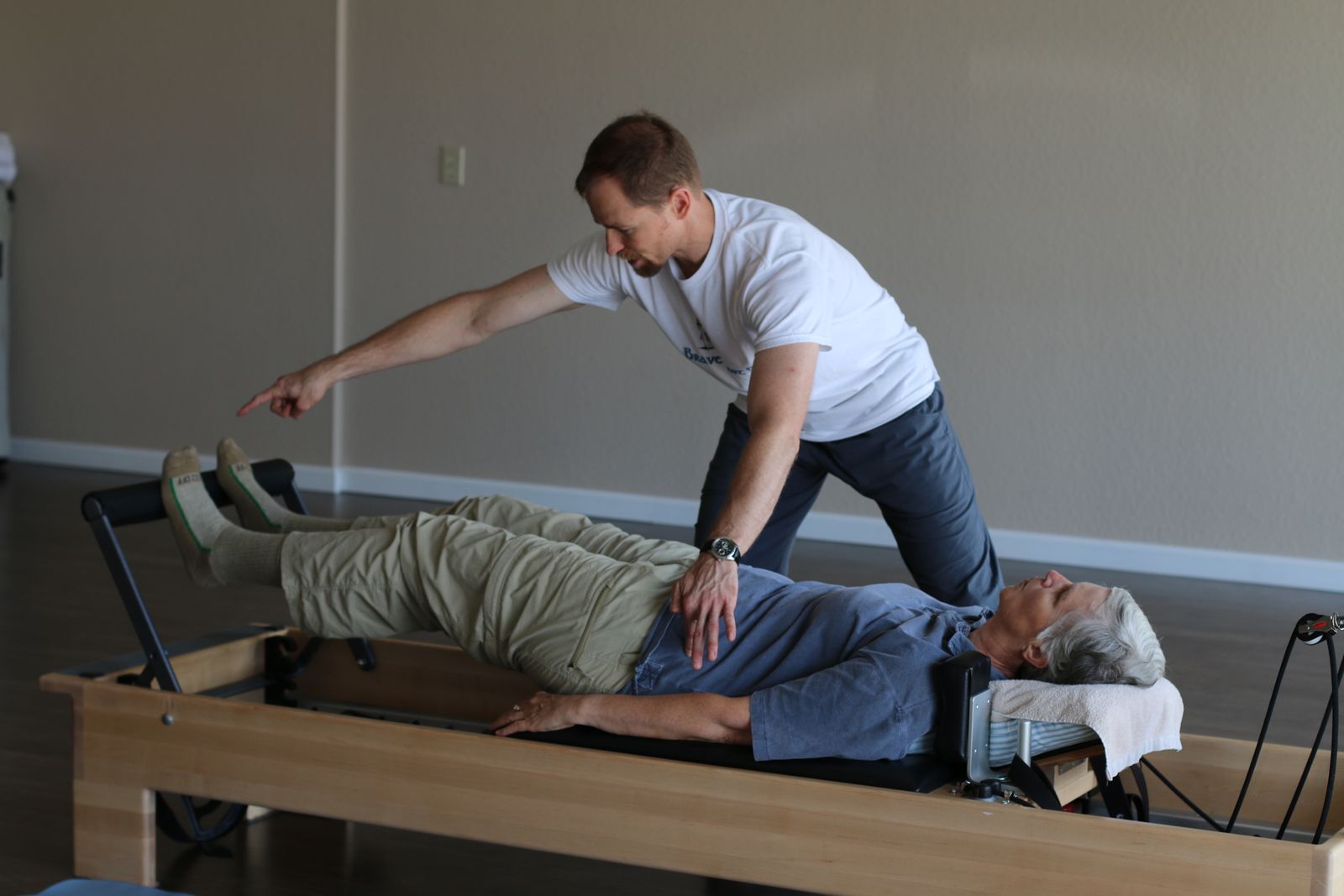
Bones Need More Than Movement. They Need Appropriate Challenge.
One of the most fascinating things about our musculoskeletal system is how closely our bones and muscles communicate.
When muscles contract, they generate forces that travel through tendons into our bones.
When we stand, walk, lift, carry, or resist gravity, our skeleton experiences mechanical loading.
Bone cells can detect these mechanical forces and participate in the processes that regulate bone remodeling.
This relationship is sometimes described through the principle of mechanotransduction: the conversion of mechanical forces into biological signals.
In simpler terms:
Our bones are influenced by the physical demands we place upon them.
But not all movement creates the same stimulus.
Walking, stretching, Pilates, resistance training, and impact activities place different demands on our skeletal system.
While mobility and flexibility work serve important purposes, improving bone mineral density generally requires sufficient mechanical loading.
That means the intensity, direction, frequency, and progression of exercise matter.
This is one reason we believe movement programs should include more than one type of exercise.
Pilates offers a wonderful foundation for body awareness, coordinated movement, and strength development.
Add in progressive resistance training and appropriate weight-bearing activities can provide additional challenges that are particularly important for bone health.
The goal is not simply to move more. It's to create the right movement demands for the individual.

Why Spinal Strength Matters Beyond Bone Density
Our spine does far more than hold us upright.
It provides structural support, protects the spinal cord, transfers forces between the upper and lower body, and allows us to move through multiple planes.
The muscles surrounding our spine play an essential role in maintaining stability and controlling movement.
As we mature, maintaining the strength and endurance of these muscles becomes increasingly important.
Research-based osteoporosis exercise recommendations emphasize spinal extensor strengthening, postural awareness, balance, and resistance training.
These are all areas that can be thoughtfully incorporated into Pilates-inspired movement and functional strength programs.
Consider What Spinal Strength Supports in Everyday Life
Standing and walking with confidence
Our spinal muscles help maintain upright posture while coordinating with the pelvis, hips, and lower extremities.
Lifting and carrying
Whether we're carrying groceries, picking up a laundry basket, or lifting something from the floor, our trunk helps transfer forces throughout the body.
Maintaining balance
Postural control depends on communication between our muscles, joints, sensory systems, and nervous system.
Responding to unexpected movement
The ability to stabilize, adjust, and recover when we lose our balance can become increasingly important with age.
Participating in the activities we enjoy
Gardening, hiking, traveling, playing with grandchildren, and enjoying recreational activities all require varying combinations of strength, mobility, and coordination.
When we develop these abilities, we're doing much more than exercising.
We're building the physical capacity to remain engaged in our lives.
What About Balance and Fall Prevention?
When discussing osteoporosis, it's easy to focus entirely on increasing bone mineral density.
But preventing fractures involves more than strengthening bone tissue.
It also means reducing the likelihood of falling.
A 2014 international consensus paper, Too Fit to Fracture, reviewed exercise recommendations for individuals with osteoporosis and osteoporotic vertebral fractures.
The expert panel strongly recommended multicomponent exercise programs that include resistance training and balance training.
This is an important distinction.
A person may have reduced bone density but also possess excellent strength, coordination, and balance.
Another individual may have relatively better bone density but struggle with instability, reduced muscular strength, or difficulty responding to changes in their environment.
Both situations deserve attention.
We want to develop stronger bones, but we also want to develop bodies that can move, adapt, and respond effectively.
That means incorporating exercises that challenge balance, strengthen the lower extremities, improve postural control, and develop coordinated movement.
It's also why the quality and progression of movement matter.

Is Pilates Safe for Women With Osteoporosis?
For many women, appropriately modified Pilates can be a useful component of an osteoporosis-conscious exercise program.
However, not every traditional Pilates exercise is suitable for every individual.
Some movements involving substantial spinal flexion, particularly when combined with rotation or resistance, may increase vertebral loading in ways that are inappropriate for someone with osteoporosis or a history of spinal compression fractures.
Exercises such as Roll Up, Roll Over, Jackknife, and certain loaded abdominal curling movements may require modification or substitution.
This doesn't mean individuals with osteoporosis should fear movement.
Quite the opposite.
Movement remains important, but exercise selection should reflect the person's bone health, medical history, fracture risk, and physical abilities.
A 2022 UK consensus statement, Strong, Steady and Straight, emphasized three important exercise priorities for individuals with osteoporosis:
1. Resistance and appropriate impact exercise to help support bone strength.
2. Strength and balance training to reduce fall risk.
3. Spinal extension exercises to support posture and spinal function.
The recommendations also emphasize avoiding positions involving a high degree of spinal flexion, particularly for individuals at increased fracture risk.
It's to move SMARTER which means understanding how to adapt movement so individuals can continue developing strength safely and effectively.
How We Approach Bone Health at Abel Wellness
One of the things we appreciate most about Pilates is that it teaches us to become more aware of how we move.
We learn to recognize where movement originates, how forces travel through the body, and where we may be compensating rather than moving efficiently.
But we also believe that awareness is only one part of the equation.
Our bodies need opportunities to develop strength, tolerate resistance, maintain balance, and adapt to the physical demands of everyday life.
That's why our approach at Abel Wellness extends beyond traditional Pilates exercises.
We integrate Pilates principles with functional movement, resistance training, balance work, mobility, and individualized progressions.
Depending on the individual, that might include:
Reformer exercises that develop coordinated muscular strength and control
Chair exercises that challenge standing strength and lower-body function
Fuse Ladder and spring-based resistance exercises
Standing balance and weight-transfer activities
Hip and lower-extremity strengthening
Spinal extensor and postural endurance exercises
Functional movements that reflect everyday activities
We also recognize that some individuals benefit from working in supported positions before progressing to more demanding standing or weight-bearing activities.
Others are ready for greater resistance and more complex movement challenges.
There is no single exercise sequence that serves everyone equally.
And that's especially true when we're working with individuals experiencing osteopenia, osteoporosis, previous injuries, or changes in physical capacity.
We don't treat diagnoses. We work with the person in front of us.
We consider their history, their current abilities, their goals, and how their body responds to movement.
For me, that's where meaningful progress begins.
Building Strength for the Years Ahead
We often think about movement in terms of what it allows us to continue doing.
Can we comfortably get up from the floor?
Can we carry what we need to carry?
Can we maintain our balance on uneven ground?
Can we enjoy a hike, work in the garden, travel, or participate in the activities that bring us joy?
And perhaps most importantly, can we continue developing these abilities rather than assuming that growing older automatically means losing them?
We cannot control every aspect of aging.
Hormonal changes, genetics, medical conditions, and life experiences all influence our bodies.
But we can make intentional choices about how we support our strength and physical capacity.
For women concerned about bone health, that may include discussing bone density screening with their healthcare provider, ensuring appropriate nutrition, and participating in a movement program that incorporates resistance, balance, and weight-bearing exercise.
Pilates can be one valuable part of that approach.
The research reminds us that bone health is complex, and no single exercise method provides every benefit.
But it also reinforces something I believe deeply:
Our bodies are capable of adaptation throughout our lives.
And movement, when thoughtfully designed and appropriately progressed, gives us opportunities to support that capacity.
Strong Bones. Strong Spine. Stronger Years Ahead.
Bone health is not simply about preventing something from happening.
It's about supporting everything we still want to do.
It's about maintaining the strength to carry our own groceries, the balance to navigate unfamiliar terrain, the confidence to try something new, and the physical resilience to continue participating in life.
We don't need to approach aging as a steady surrender of our abilities.
Instead, we can approach it with curiosity, intention, and a commitment to developing the strength that supports our future.
Because longevity isn't just about the number of years we live. It's about maintaining the strength, confidence, and freedom to live those years fully.
At Abel Wellness Movement Specialists in Franklin, North Carolina, we offer individualized private sessions and small-group movement experiences that integrate Pilates-inspired movement, functional strength, balance, and mobility.
Whether you're beginning a movement practice, returning after physical therapy, or looking to develop greater strength as you mature, our work begins with understanding you and how you move.
Interested in developing a movement practice that supports your strength and longevity?
Explore our private sessions and small-group classes, or schedule an Explore & Tour to learn more about our approach.

Coming January 2027: The Adaptive Body Movement Lab
Want to take what we're exploring in this article a little further? The Adaptive Body is our upcoming four-part, small-group Movement Lab exploring body awareness, functional strength, balance, fall prevention, and recovery skills. Through hands-on movement experiences and access to an online movement library, we'll explore how our bodies can continue learning, responding, and adapting.
Research & Further Reading
The following peer-reviewed publications provide additional insight into Pilates, bone density, resistance training, and exercise recommendations for women with osteoporosis.
1. Angın E, Erden Z, Can F. (2015).
The effects of clinical pilates exercises on bone mineral density, physical performance and quality of life of women with postmenopausal osteoporosis.
Journal of Back and Musculoskeletal Rehabilitation, 28(4), 849–858.
DOI: 10.3233/BMR-150604
A clinical study involving 41 women that reported improvements in lumbar spine bone mineral density, physical performance, pain, and quality of life following Clinical Pilates.
2. de Oliveira RG, Anami GEU, Coelho EA, de Oliveira LC. (2022).
Effects of Pilates Exercise on Bone Mineral Density in Postmenopausal Women: A Systematic Review and Meta-analysis.
Journal of Geriatric Physical Therapy, 45(2), 107–114.
DOI: 10.1519/JPT.0000000000000309
A systematic review of three randomized controlled trials that found no statistically significant overall improvement in bone mineral density from Pilates. The authors emphasized the limited quantity and quality of available research.
3. Giangregorio LM, et al. (2014).
Too Fit To Fracture: Exercise Recommendations for Individuals With Osteoporosis or Osteoporotic Vertebral Fracture.
Osteoporosis International, 25(3), 821–835.
DOI: 10.1007/s00198-013-2523-2
An international consensus paper supporting multicomponent exercise programs that include resistance and balance training for individuals with osteoporosis.
4. Brooke-Wavell K, et al. (2022).
Strong, Steady and Straight: UK Consensus Statement on Physical Activity and Exercise for Osteoporosis.
British Journal of Sports Medicine.
A multidisciplinary consensus statement emphasizing resistance training, appropriate impact exercise, balance, spinal extension, and individualized movement modifications.
Educational note: This article is intended for general education and does not replace individualized medical advice. Individuals with osteoporosis, previous vertebral fractures, or other conditions affecting bone strength should consult their healthcare provider about appropriate exercise recommendations.
Patti Abel | OCT 25, 2026
Share this blog post


© 2026 Abel Wellness